
Every great breakthrough begins as a whisper of an idea—a sketch on a whiteboard, a mathematical model, or a shared vision among a team determined to push the boundaries of technology. For Project Samarth (Smart Augmented Mobility and Adaptive Rehabilitation Technologies for Humans), that whisper has officially evolved into a tangible reality.
We are thrilled to share a major milestone in our journey: transitioning from digital blueprints to actual, physical prototypes using cutting-edge 3D printing technology.
The Digital Blueprint: Precision by Design
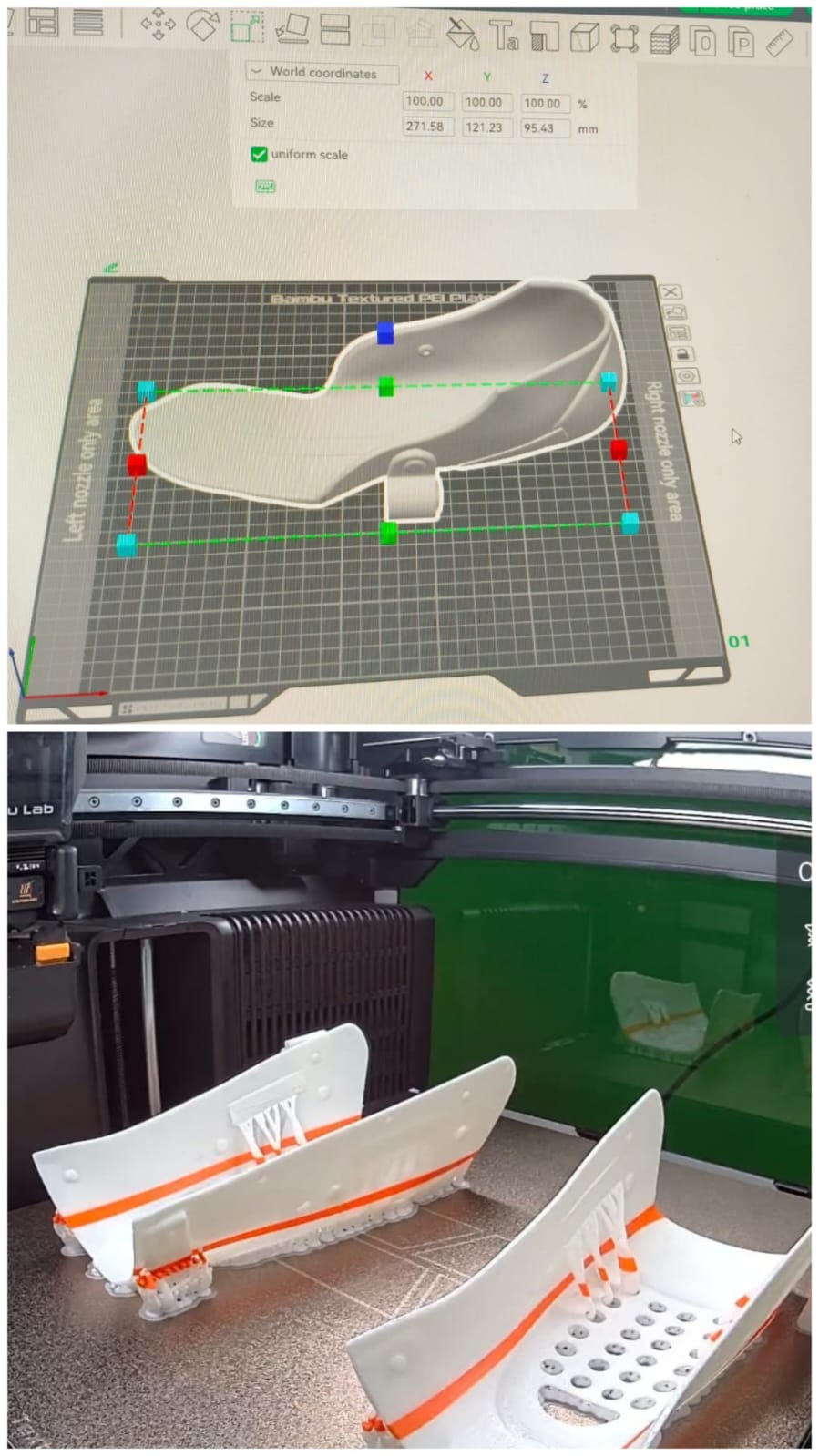
Our transition into the physical world began on the screen. True rehabilitation and augmented mobility demand an intense focus on ergonomics and anatomical accuracy. The journey starts in the slicer and design software, as seen in the above visuals.
Every curve, angle, and millimeter of the component was meticulously scaled (271.58 * 121.23 * 95.43 mm) to ensure a perfect balance between robust structural support and lightweight comfort for the end user. This digital phase allowed us to stress-test the geometry and map out the exact path the 3D printer would take to bring our vision to life.
Materializing Innovation: The 3D Printing Phase
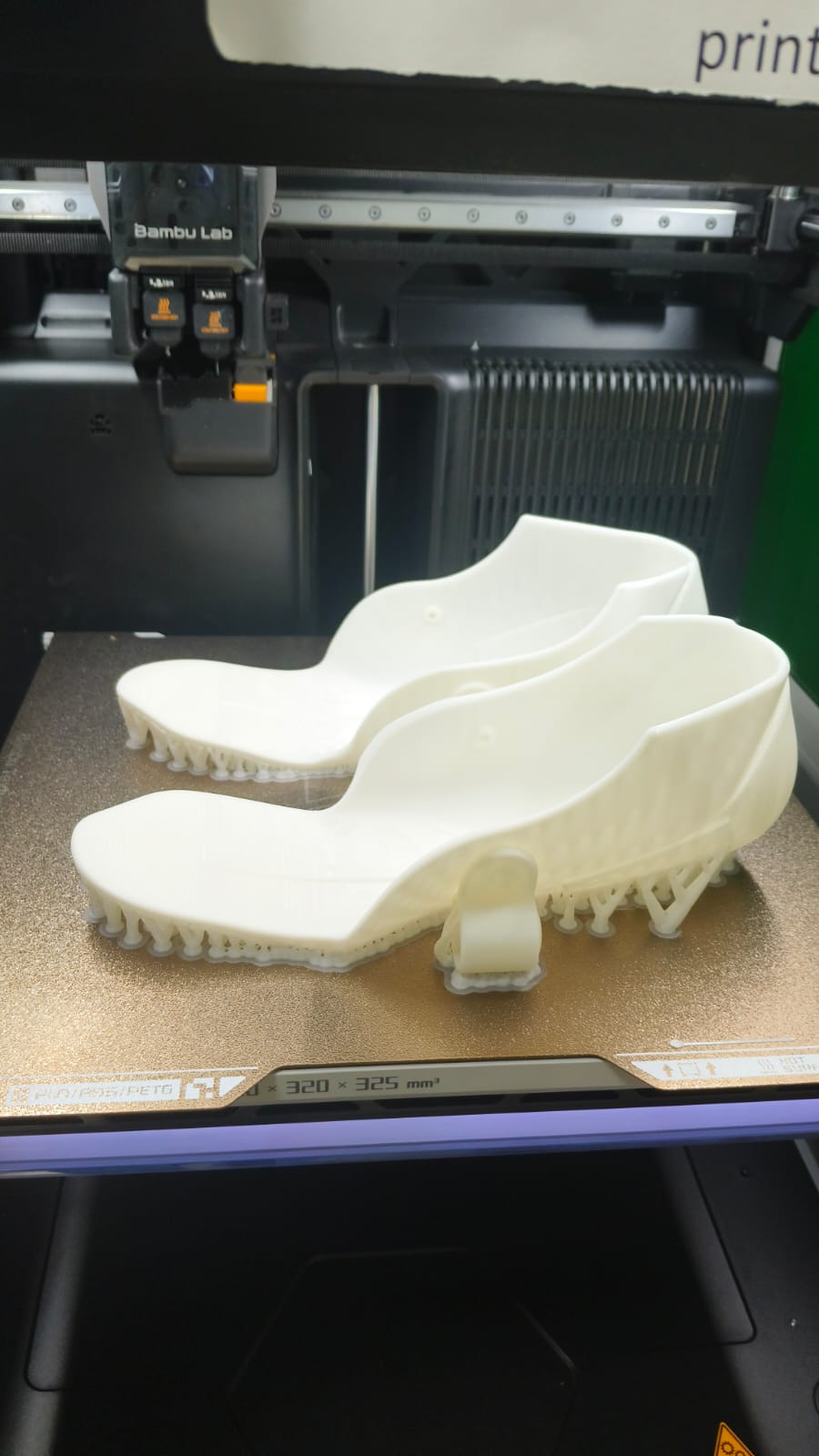
Moving from a 3D model to a physical object is where engineering meets execution. Using a high-precision Bambu Lab 3D printer, we successfully fabricated the custom, ergonomic brace components designed to integrate seamlessly with our rehabilitation framework, as showcased in the above visuals.
By leveraging 3D printing, we have unlocked several core advantages crucial to the project’s success:
Rapid Prototyping: Iterating designs in hours rather than weeks, allowing us to test form, fit, and mechanical function in real-time.
Complex Geometries: Fabricating specialized, lightweight tree supports and intricate contours that traditional manufacturing simply cannot replicate.
Customization: Preparing the foundation for bespoke, patient-specific rehabilitation gear tailored to individual unique anatomical structures.
Bridging Software and Structure
This hardware milestone brings us one step closer to full system integration. These physical structures are designed to work hand-in-hand with our advanced software modules—like our KinemaFlow movement analysis system—and smart microcontrollers to create a cohesive, adaptive, and truly intelligent mobility solution.
What’s Next?
With these physical components in hand, the team is moving directly into mechanical testing, structural reinforcement, and hardware-software assembly.
Project Samarth is no longer just a concept confined to research papers and digital models. Thanks to modern manufacturing technologies and relentless dedication, it is an active, breathing initiative stepping steadily into the future of healthcare and assistive tech.
Stay tuned as we continue to build, test, and push the boundaries of what is possible!